
Fourth CESOC Members’ Assembly in Jülich: Supercomputers, Statistics and a Missing Quorum

The 4th CESOC Members’ Assembly was the first one held on the Forschungszentrum Jülich, and the last one for two of our directors. When a centre for Earth system observation […]
KlimaOER stands for Open Educational Resources for Climate Science
Is your summer a bit quieter than usual? Colleagues out of office, inboxes slow to fill – and somehow you’ve found yourself buried in teaching materials anyway, prepping slides, handouts, […]
Making petabyte-scale weather and climate data easier to access: Mathilde Leuridan completes her PhD
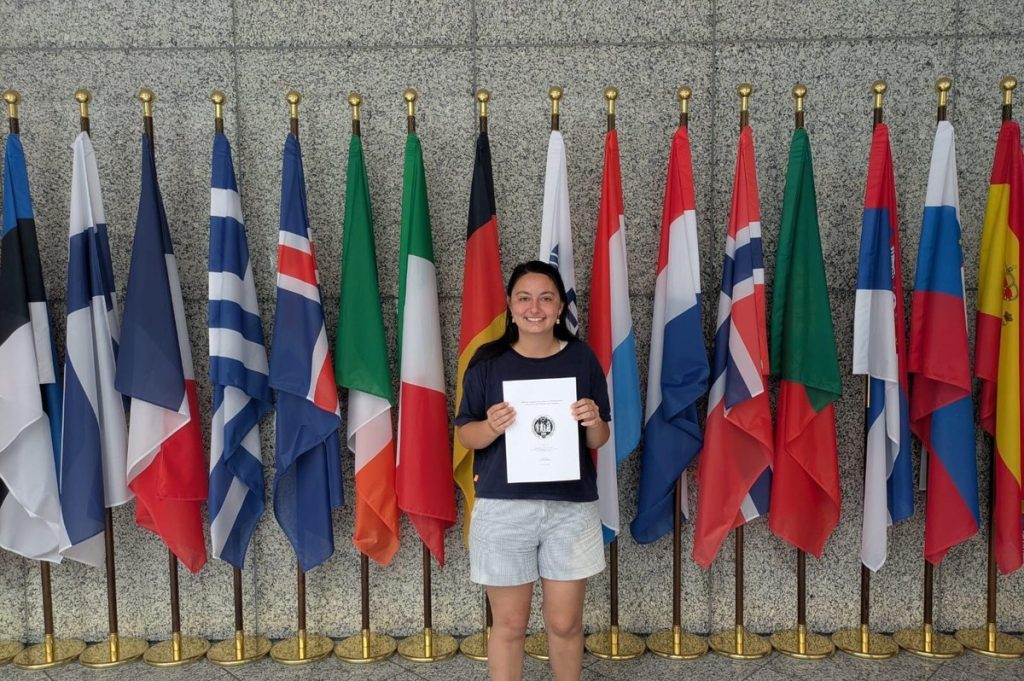
On 4 August 2026, Mathilde Leuridan successfully defended her PhD at the University of Cologne. Her dissertation, Efficient Feature Extraction of Petabyte-Scale Datacubes for Weather and Climate, was carried out in collaboration with […]
47 scientists. 5 challenges. 1 hackathon. Can we predict the output?
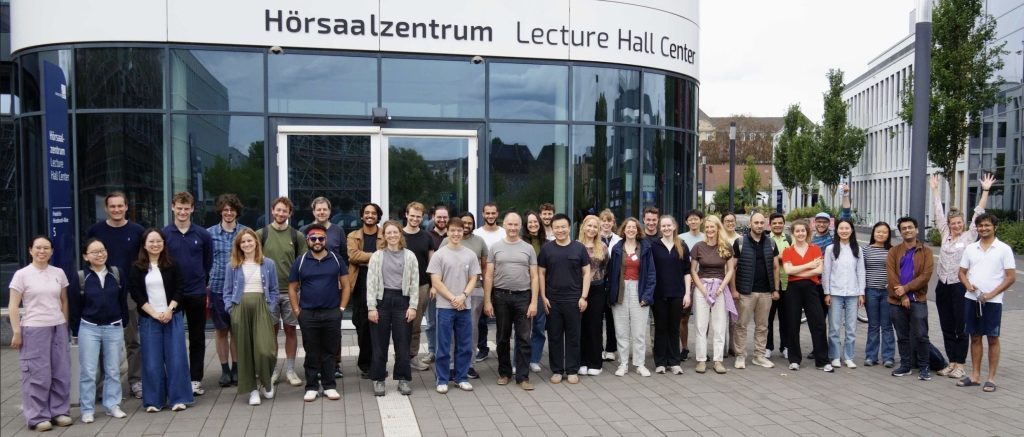
With complex, chaotic systems, predictions are notoriously unreliable, especially once several variables start interacting. That was precisely the puzzle at the heart of three days in Bonn, as early-career researchers […]
First wildfires breaking out across the CESOC region

As summer temperatures continue to rise, the first wildfires are breaking out across the CESOC region. Near Forschungszentrum Jülich, fires are burning in the municipality of Hürtgenwald in the Düren […]
Paper Alert at Forschungszentrum Jülich: “TOAR-classifier v2: A data-driven classification tool for global air quality stations”
The work by Ramiyou Karim Mache, Sabine Schröder, Michael Langguth, Ankit Patnala, and Martin Schultz at Jülich Supercomputing Centre (JSC) directly supports the Tropospheric Ozone Assessment Report (TOAR-II) project by applying machine learning to objectively classify air […]
Hiring: Earth System Modeller (UB), ML Scientist for the KPA IMfESS (UoC), Data Software Engineer for Weather and Climate Data (FZJ)
Three CESOC-relevant positions are currently open for applications across the three CESOC institutes. Find the details and application links here: If you have any questions, feel free to reach out […]
Publication on AlgoEarth workshop: How to Design the Future Earth Observation System?
Back at the cold winter days, we hosted the Workshop on “Smart Earth Observation System Design” as part of the AlgoEarth Semester at the University of Cologne. Ulrich Löhnert et […]
CESOC at HAICON26: Agents in environmental modelling

The sixth Helmholtz AI Conference 2026 (HAICON26) brought together AI representatives from academia and industry in Munich from June 8–11, 2026. Organised by Helmholtz AI, the conference was held under […]
ellis is not an abbreviation for several small Elisabeths
Instead, it stands for the European Laboratory for Learning and Intelligent Systems (ELLIS), a pan-European network that brings together leading research institutions, computing infrastructure, and industry partners to strengthen Europe’s position […]