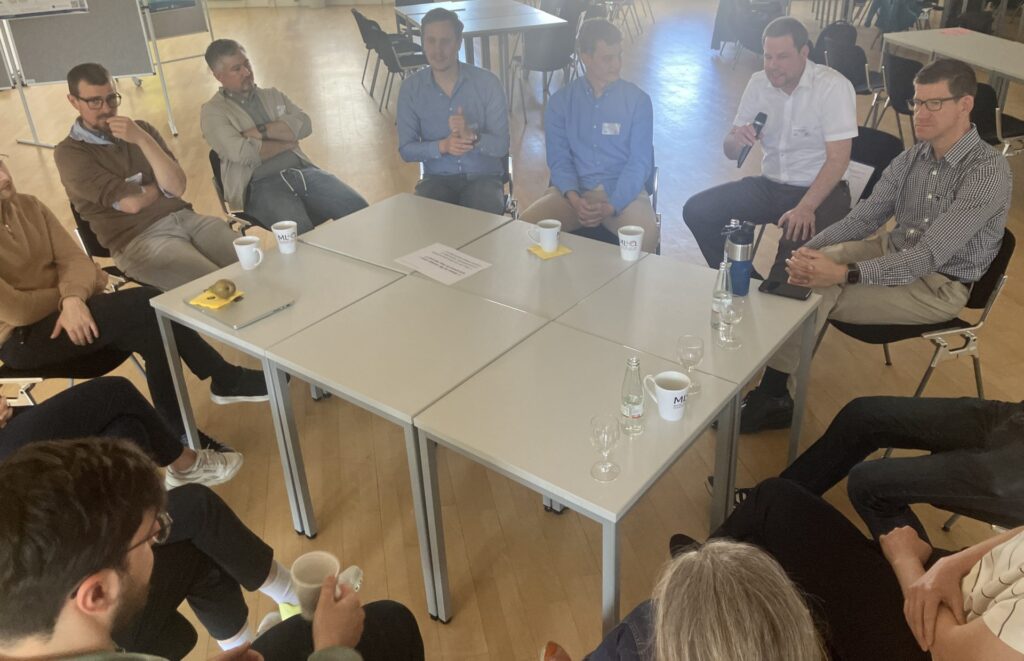
CESOC working groups provide collaborative platforms for focused research and knowledge exchange. Two groups are currently active:
1. Working Group on Reanalysis
Reanalyses generate the most complete picture of past weather and climate by integrating massive observational records with numerical models. They form the backbone of weather and climate forecasting, underpinning the ECMWF Integrated Forecasting System (IFS). Looking ahead, important topics to be addressed include the process-oriented evaluation of reanalyses, the integration of emerging novel observations, data assimilation (DA) of non-Gaussian data, coupled DA at the local scale, and the use of DA to optimise Earth observation (EO) data.
With ERA5 widely used, efforts are now directed toward ERA6. CESOC contributes by connecting users to ECMWF via the EQC (Evaluation and Quality Control) mechanism, ensuring that new reanalyses meet scientific and societal needs. Research within CESOC spans stratospheric processes, tropospheric circulation, extreme events, and Arctic conditions, advancing understanding of long-term climate dynamics.
The first in-person meeting (February 2024) attracted over 60 participants from CESOC and ECMWF, strengthening cooperation and initiating joint projects. CESOC now participates regularly in ECMWF’s reanalysis discussions.
2. Working Group on Using Machine Learning in EO Data Analysis, Weather Forecasts, and Climate Projections
Machine learning (ML) is rapidly transforming Earth system modelling — from ECMWF’s AIFS forecast model to emerging foundation models in CESOC-led projects (WeatherGenerator, RAINA). This is evidenced by the strong international interest in the two workshops on “Machine Learning for Earth System Modelling” held in Bonn, the successful organisation of other machine learning events, and the acquisition of funding for several related projects.
The CESOC Machine Learning Working Group brings together researchers from Cologne, Jülich, DWD, ECMWF, and beyond to explore opportunities and challenges. Discussions include physical consistency, data quality, and HPC access (e.g. JSC’s exascale supercomputer JUPITER). At the kick-off (hyperlink to latest ML working group article), the group created a collaborative spirit around the potential and limitations of ML in physics-based applications, setting the stage for cross-institutional projects and innovative methods.
Relates Posts
The CESOC Machine Learning Working Group Kicks Off
21. May 2025
Machine learning is becoming essential in Earth System modelling – from European Centre for Medium-Range Weather Forecasts – ECMWF’s AIFS forecast model to the design ...
A planned working group on energy meteorology would address the growing importance of reliable weather and climate information for the energy sector. The accelerating transition to renewable energy strongly increases the need for accurate forecasts of wind, solar radiation, precipitation, and extreme events, as well as robust climate projections for long-term planning. Integrating meteorological expertise with energy system modeling is essential for ensuring grid stability, managing variability, and assessing risks under climate change.
The group could build on CESOC’s strengths in Earth system science and machine learning, while connecting to stakeholders in energy research, utilities, and policy. With the establishment of the new professorship of Julian Quinting, CESOC is well positioned to coordinate activities in this field and develop innovative approaches that link weather and climate knowledge directly to energy system resilience and sustainability.
Working Group on Innovative EO Systems
A planned working group on energy meteorology would address the growing importance of reliable weather and climate information for the energy sector. The accelerating transition to renewable energy strongly increases the need for accurate forecasts of wind, solar radiation, precipitation, and extreme events, as well as robust climate projections for long-term planning. Integrating meteorological expertise with energy system modeling is essential for ensuring grid stability, managing variability, and assessing risks under climate change.
The group could build on CESOC’s strengths in Earth system science and machine learning, while connecting to stakeholders in energy research, utilities, and policy. With the establishment of the new professorship of Julian Quinting, CESOC is well positioned to coordinate activities in this field and develop innovative approaches that link weather and climate knowledge directly to energy system resilience and sustainability.